Training, with a clear next step

A four-week plan.
Make it your own.

Build a plan around your goal, schedule, experience and equipment. Move a workout day or swap an exercise during the cycle; review and adjust the next plan after four weeks.

Workout overviewApp screenshot placeholder

Clearset’s planning structure

Four phases.
One training cycle.

The cycle moves through Foundation, Progression, Intensification and Deload. Sets, reps, rest and training effort adjust to your goal and phase.

01Week one

Foundation

Set your starting prescription.

02Week two

Progression

Build on the foundation.

03Week three

Intensification

Raise effort and adjust training variables.

04Week four

Deload

Lower training demand.

After week four, review the next plan. Adjust your settings and make available exercise swaps before starting.See the method and sources

In the middle of a session

See what’s done. Open what’s next.

Keep completed exercises and logged sets in view. Open the next exercise to see its demonstration and target, then log each set.
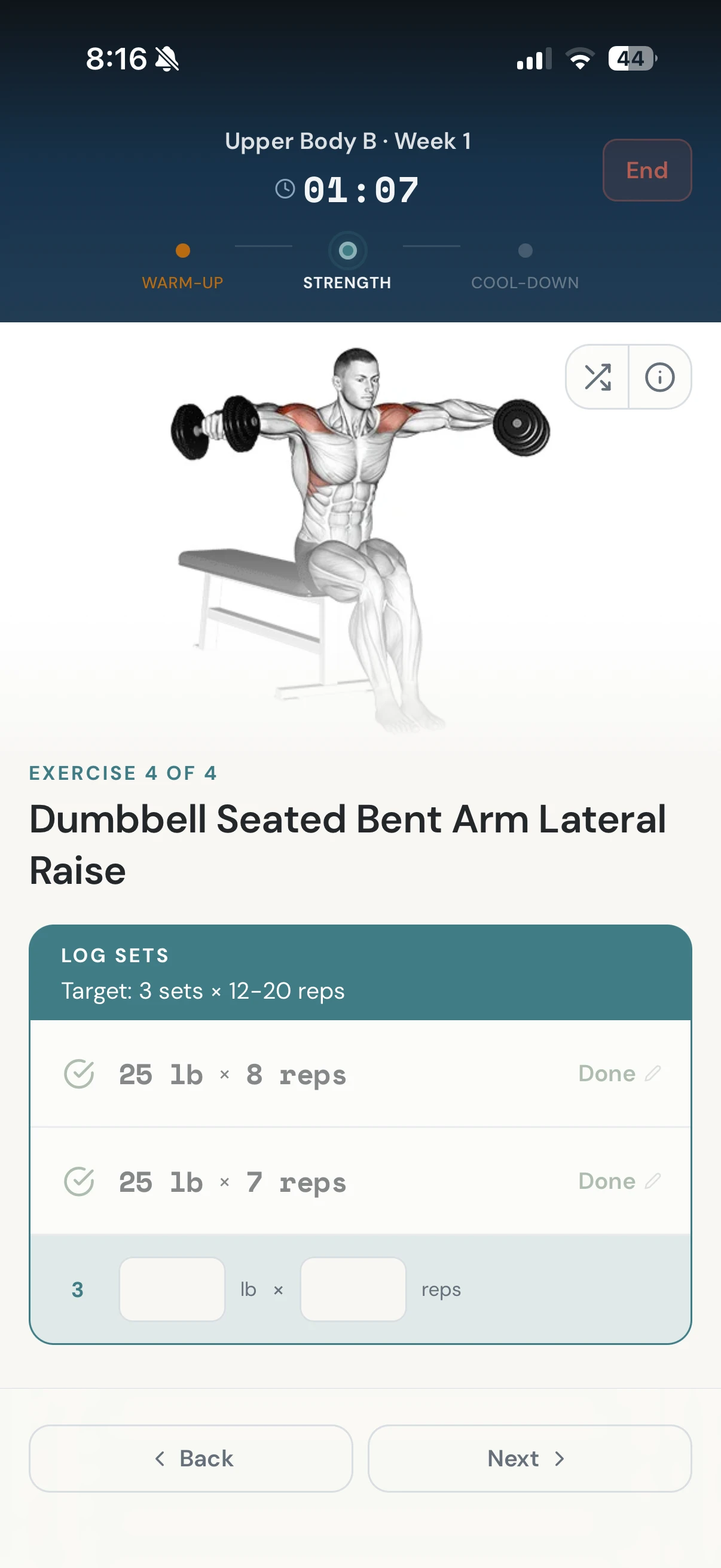
  • 01Keep completed movements and logged sets in view.
  • 02Open the next exercise with its target close at hand.
  • 03Enter load and reps one set at a time.
Active workout · exercise and set logging

1,394 exercise records

Source: ExerciseDB.io.

Strength Momentum · Progress by Muscle

From muscle map
to exercise history.

Choose a muscle to see its primary exercises, then open an exercise to review working weight, average reps at that weight and session details.
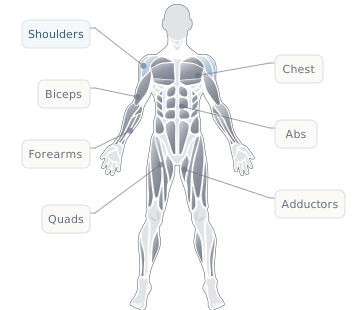
1Muscle mapFront view
2Progress by ExerciseShoulders
StrengthCardio
Progress by ExerciseShoulders · primary muscle
Dumbbell Lying Rear Lateral Raise
vs last↑ 6%vs last 3↑ 4%personal best20lb × 14 reps
Dumbbell Lateral Raise
vs laststablevs last 3—personal best20lb × 12 reps
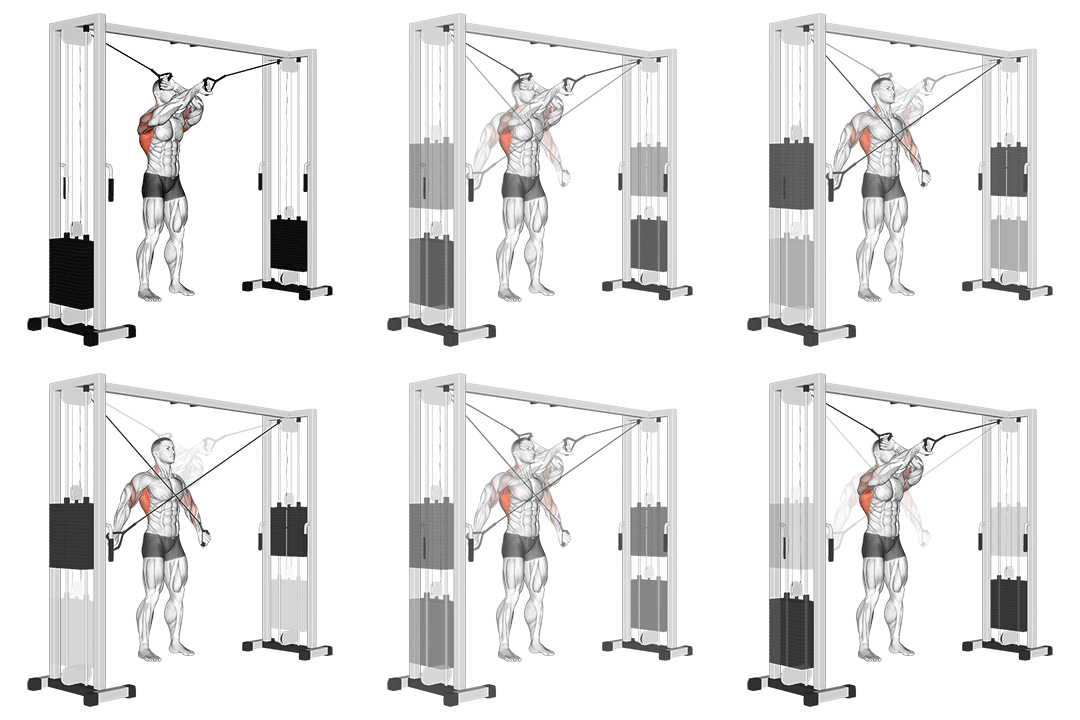
Cable Lateral Raise
vs lastnewvs last 3newpersonal best—

The app groups exercises by primary muscle. Open an exercise to review its history. Values are illustrative.

3Exercise history4 sessions
Dumbbell Lying Rear Lateral RaiseStrength Momentum · selected exerciseIllustrative workout data
30 Days60 Days90 Days
Working Weightlb · most-used load across sets
Working weight across four illustrative sessionsFour sessions show working weights of 15, 17.5, 17.5, and 20 pounds, with the average, high and low shown as in the app.20 lb15 lbavgJun 3Jun 24
Low15 lbAvg17.5 lbHigh20 lb
Avg Reps at Working Weightreps · per session
Average repetitions at working weight across four illustrative sessionsFour sessions show average repetitions of 14, 15, 15, and 14 at working weight, with the average, high and low shown as in the app.15 reps14 repsavgJun 3Jun 24
Low14 repsAvg14.5 repsHigh15 reps
Session Details
Jun 24Intensification
Set 120 lb × 14 reps
Set 220 lb × 14 reps
Set 320 lb × 14 reps
Set 420 lb × 14 reps

The in-app graph also shows session details and training phase. Values here are illustrative.

When a cycle ends
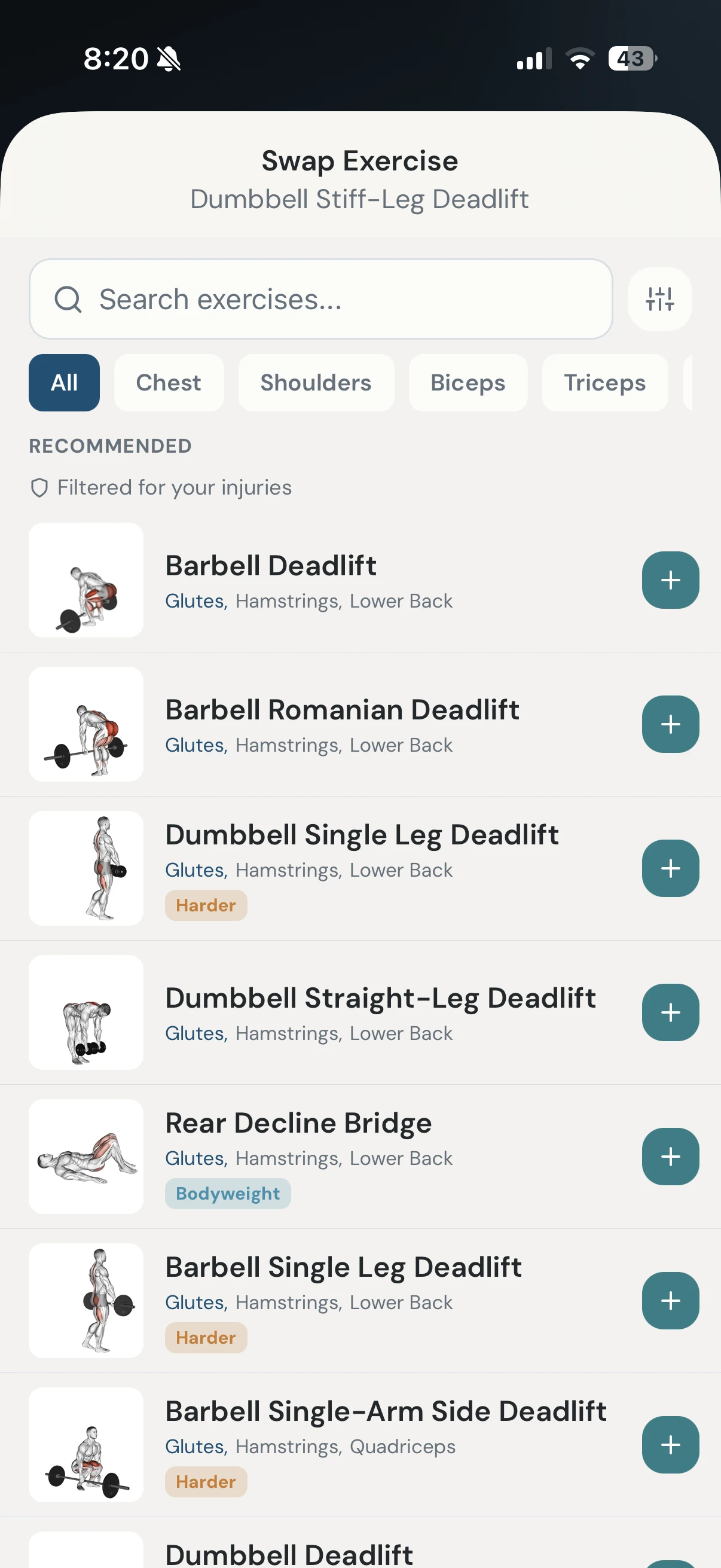
At week four, review
and adjust the plan.

Exercise swap · review available alternatives
Exercise changes

Compound exercises can carry forward. Supporting exercises rotate.

Eligible compound exercises can carry forward for consistent strength tracking. Isolation and accessory exercises rotate when suitable alternatives are available, adding variety to supporting work. Goal, experience, recent exercise use, equipment and injury settings guide the available choices. See periodization and exercise-variation sources.

Your next plan

Set up the next cycle.

Set your goal, experience level, training days, session length, equipment and injury limitations. Review the schedule and make available exercise swaps before starting.

Beyond the workout

Review your training over time.

Explore progress